Water Entry & Core Strengthening

You go first
Your dog needs to see you walk into the water calmly before they will follow. You are their mentor in this — if you hesitate at the edge, they will too. Walk in with purpose, keep your body relaxed, and let your dog watch you for a moment before encouraging them to follow.
Ramp entries
If you have access to a ramp or gradual slope into the water, this is the easiest starting point. Walk your dog on lead down the ramp, letting them feel the water rise gradually up their legs. Do not pull them — let them set the pace. If they stop, wait. Let them sniff, look around, and process. Then take one more step and wait again.
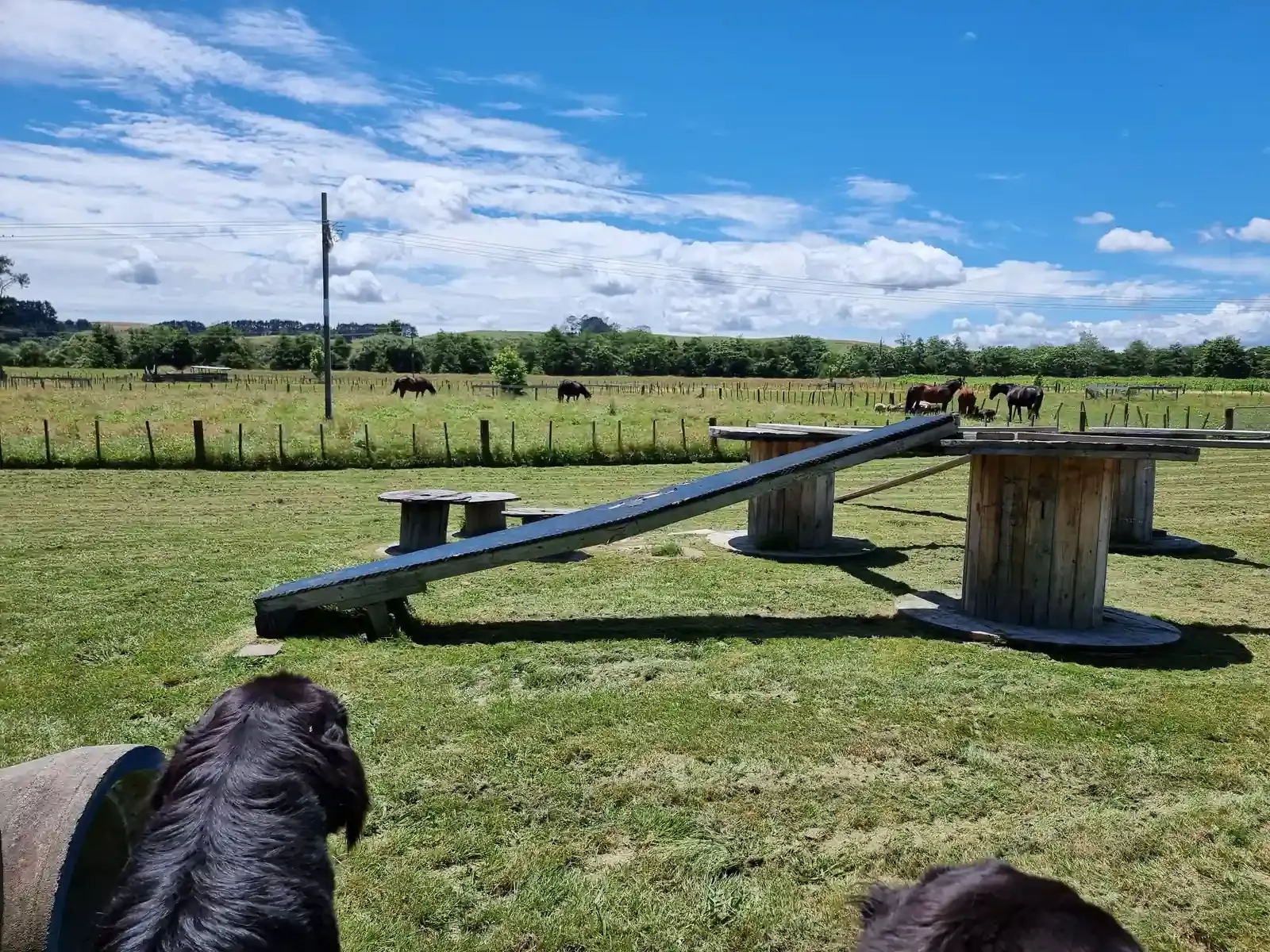
Shoreline and beach entries
For beaches, lakes, or rivers, walk along the water's edge first. Let your dog get their paws wet without any pressure to go deeper. Play on the shoreline with their favourite toy. Once they are comfortable at the edge, wade in to ankle depth and call them to you. Keep it shallow and short.
Lead technique
Clip the lead to the front of the harness. Walk beside your dog, not ahead of them. The lead should have a gentle curve — never taut. If your dog tries to bolt out of the water, guide them calmly back rather than hauling them. The lead is a safety line, not a steering wheel.
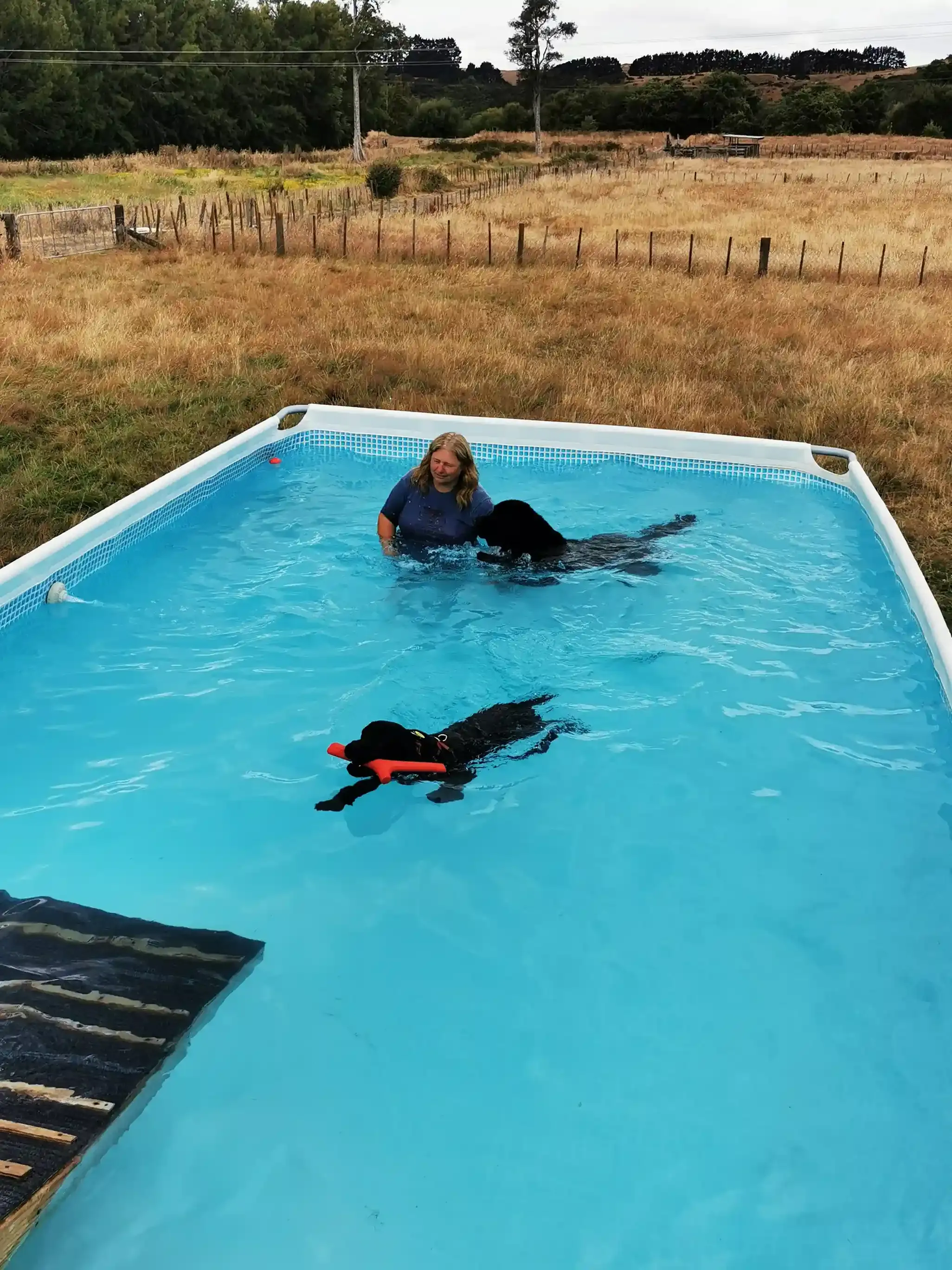
Why does my dog like the sea but not the pool?
This is incredibly common. At a beach or lake, your dog can see the full environment — there are no hidden threats. A pool has walls that block their view, and the water looks and smells different. The enclosed space can feel threatening because they cannot assess what is around the corner. This is why trust building through the Heart to Heart hold matters so much before pool entries.
Core strengthening exercise
Once your dog is comfortable standing in chest-deep water, gently encourage them to shift their weight from side to side by moving a toy slowly left and right. The water resistance against their body forces their core muscles to engage for balance. This is one of the reasons swimming is such excellent exercise — five minutes of this in water is equivalent to a much longer workout on land.

Fiona's Tip
At Newflands we built a proper ramp into our pool specifically because I saw how much easier it made the first entry for nervous dogs. But you do not need a fancy setup — a sloping beach or even a shallow step into a lake works just as well. The key is that your dog can feel the bottom under their feet the entire time. The moment they lose the ground, they panic. So keep it shallow until they are choosing to go deeper on their own.
Duration | Practice

